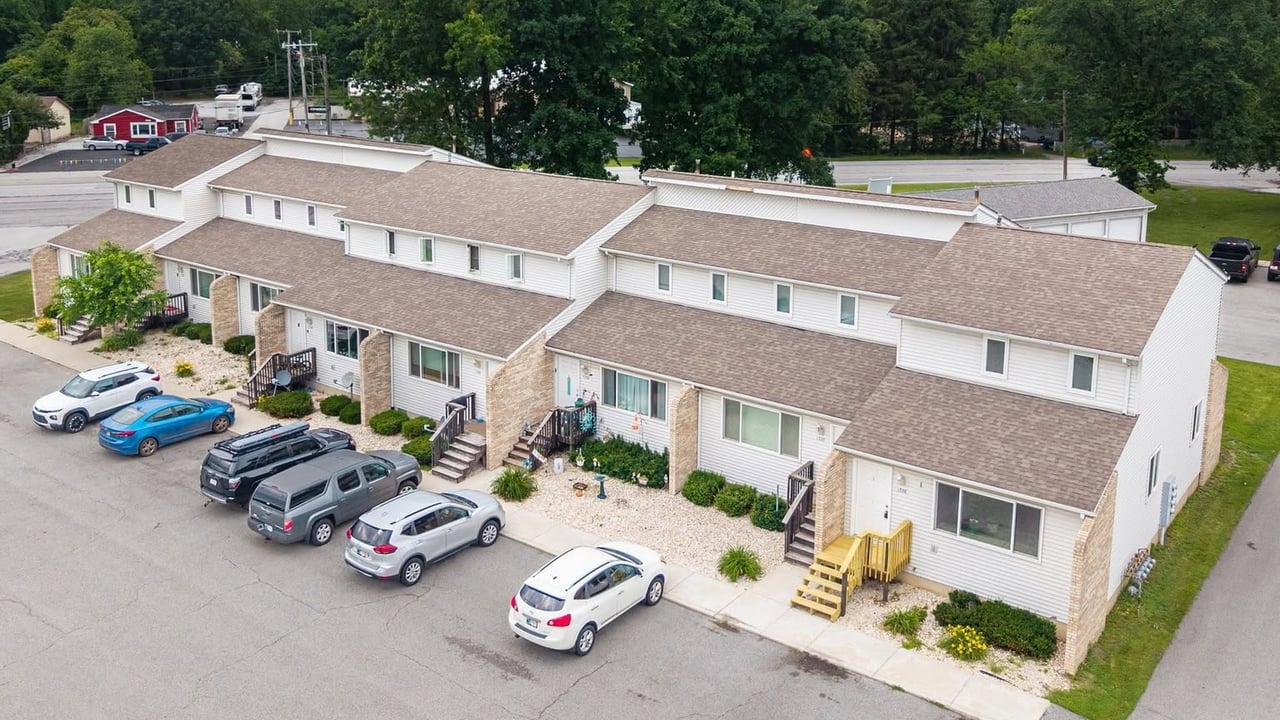
Chicago investors are crossing the state line because Lake County, Indiana offers what their home market has a harder time delivering: full buildings, rents that keep climbing, lower entry prices, and a more predictable tax and regulatory climate, all within an hour of the Loop.
We see this from the closing table every week. Ellsbury Commercial Group is headquartered in Highland, a few minutes from the Illinois line, and a growing share of the buyers calling us about Hammond, Munster, Highland, Merrillville, Crown Point and Schererville multifamily have Chicago or suburban Cook County addresses. Our leadership also owns and operates apartments across Indiana and Michigan, so what follows is the view of both a broker and an owner.
Demand is outrunning supply
Lake County is short on the apartments renters want, and new construction is not closing the gap. The region’s own planning agency, NIRPC, put it plainly in its July 2026 update: Northwest Indiana lacks multifamily development, and there is little available inventory in the rent ranges that are in demand.
The numbers back that up. Lake County’s housing stock grew only about 3% between 2020 and 2024, below the region’s 4% goal. NIRPC also found shortages for households earning $100,000 to $200,000 and above, the renters who can carry a well-kept unit in Munster, Highland or Crown Point and who have few good options today.
A note on the headline vacancy figure: NIRPC puts total housing vacancy in Lake County near 10%. That number counts every empty structure in the county, including long-abandoned stock in parts of Gary and East Chicago. It says little about a renovated 12-unit in Highland. In the buildings we own and broker, the story is full occupancy and short turn times. [Insert Ellsbury portfolio occupancy figure and average days-to-lease.]
Chicago’s paycheck, Indiana’s rent
Lake County is not a separate market from Chicago. It is part of the Chicago metro, and its renters earn Chicago-area wages while paying Indiana rents. That spread is the engine behind the demand.
The rail link just got much stronger. The South Shore Line’s Monon Corridor (the West Lake extension) opened to passengers on March 31, 2026, adding stations at Hammond Gateway, South Hammond, Munster Ridge Road and Munster/Dyer with direct service to Millennium Station downtown. The Double Track project, finished in May 2024, added 14 weekday trains on the main line through Gary, Miller and Portage. Together the two projects are projected to draw about $2.7 billion in private investment and more than 6,000 jobs to the region by 2048.
For an investor, that means a renter in Munster can now reach the Loop by train without driving into Illinois first. Properties within a short drive of the new stations are where we expect rents to move first.
The ties run beyond downtown Chicago. Lake County sits on I-80/94, I-65 and the Indiana Toll Road, the freight spine of the Midwest. Steel, logistics, healthcare and casino employment keep a working-class renter base in place that does not depend on any one employer or any one city.
The policy climate: predictability is the product
The biggest reason we hear from Chicago clients is not ideology. It is predictability. An owner underwriting a ten-year hold wants to know what the tax bill and the rulebook will look like in year five, and Indiana gives clearer answers on both.
Property taxes. Cook County’s total property tax billing rose for the 32nd straight year in 2025, and residential bills countywide climbed 5.34%, or about $600 million. The south and west suburbs are up for reassessment in the 2026 cycle and the city of Chicago in 2027, so many Chicago-area owners do not yet know their next bill. In Indiana, the circuit breaker caps are written into the state constitution: tax on rental residential property is capped at 2% of gross assessed value. The 2025 reform law, SEA 1, adds a new deduction for 2%-cap property that phases up toward one-third of assessed value by 2031.
Rent regulation. Illinois still bans local rent control under its 1997 preemption act, but repeal bills (SB 1260, HB 3687 and SB 2884) remain pending in Springfield, and the debate returns every session. Indiana went the other direction: since 2021, landlord-tenant law is set at the state level, and cities and counties cannot layer their own rules on top.
City finances. Chicago’s budget fights keep new revenue ideas on the table; this fall the mayor again proposed a corporate head tax, which business groups have vowed to block. Whatever one thinks of the policy, it is one more variable Chicago investors have to price in.
Chicago / Cook County | Lake County, Indiana | |
|---|---|---|
Tax on rental property | No hard cap; set by levies and reassessment | Constitutional cap at 2% of gross assessed value |
Recent trend | Total billing up 32 years in a row | New SEA 1 deduction phasing in through 2031 |
Local rent control | Banned, but repeal bills pending | Barred; landlord-tenant rules set by the state |
Local landlord rules | City ordinance (Chicago RLTO) on top of state law | One statewide framework |
To be fair to the other side of this debate: tenant advocates argue Indiana’s approach leaves renters with fewer protections, and Illinois supporters of repeal see local rent rules as an affordability tool. Investors should understand both views. Rules can change in either state, and good operators win under any of them.
The math: more units per dollar
A Chicago investor’s capital buys more doors and more cash flow across the state line. Northmarq puts the Chicago-metro median apartment sale at $239,500 per unit in the first half of 2026, with cap rates averaging about 6.0%. The same dollars in Lake County typically buy older, smaller buildings at a fraction of that per-unit price.
Metric | Chicago metro (H1 2026) | Lake County, IN (Ellsbury closed deals) |
|---|---|---|
Median price per unit | $239,500 | [insert] |
Average cap rate | ~6.0% | [insert] |
Tax on rental property | Uncapped, reassessment-driven | Capped at 2% of gross assessed value |
Lower entry prices also lower the bar to scale. A buyer who could afford one Chicago six-flat can often assemble a small portfolio in Hammond, Highland or Merrillville and spread vacancy risk across more units. Lake County’s median rent was $917 in 2024, which leaves room to raise rents on renovated units without pricing out the local workforce.
What to watch before you buy
Lake County rewards local knowledge and punishes guesswork. The same county that holds full buildings in Munster also carries a roughly 10% overall housing vacancy rate, so the block matters more than the zip code.
- Older stock. Much of the inventory is 1950s to 1970s construction. Budget for roofs, boilers, sewer laterals and electrical, and get a real property condition assessment.
- Submarket spread. Rents, tenant profiles and appreciation vary sharply between Gary, Hammond, Highland, Merrillville and Crown Point.
- Taxes still move. The 2% cap limits the bill, but assessments and local rates still change. SEA 1 also opens the door to higher local income taxes, so underwrite conservatively.
- Management. Out-of-state owners without a strong local manager are where we see the most trouble. Line up management before closing, not after.
Why work with Ellsbury
We live and invest where we broker. Ellsbury Commercial Group is based in Highland, specializes in Indiana and Midwest multifamily, and has 60 agents across five states. Our leadership owns and operates apartments in Indiana and Michigan, so we underwrite every deal the way an owner would.
For Chicago investors, that means off-market access in Lake County, rent comps from buildings we actually manage, and a team that has walked buyers through Indiana title, tax appeals, inspections and lender requirements many times over.
If you are a Chicago investor looking at Northwest Indiana, call us before you make an offer. We will tell you which blocks we would buy on, and which ones we would not. [Insert phone, email and link to current listings.]
Sources
- NIRPC, NWI 2050+ Update: Land Use & Housing, July 8, 2026
- South Shore Line, Special Projects (Monon Corridor and Double Track)
- Rep. Frank Mrvan, South Shore’s Double Track finally arrives
- Chicago Sun-Times, Cook County property taxes billed rise 32nd straight year, Aug. 24, 2026
- Indiana DLGF, Property Tax Caps / Circuit Breaker Fact Sheet, Nov. 2025
- KSM, Indiana SB 1 property tax reforms
- Illinois rent control preemption: pending bills SB 1260, HB 3687, SB 2884
- Prosperity Indiana, Housing Preemption Overview (SEA 148)
- Northmarq, Chicago Multifamily Market Insights Q2 2026
- STATS Indiana, Lake County profile