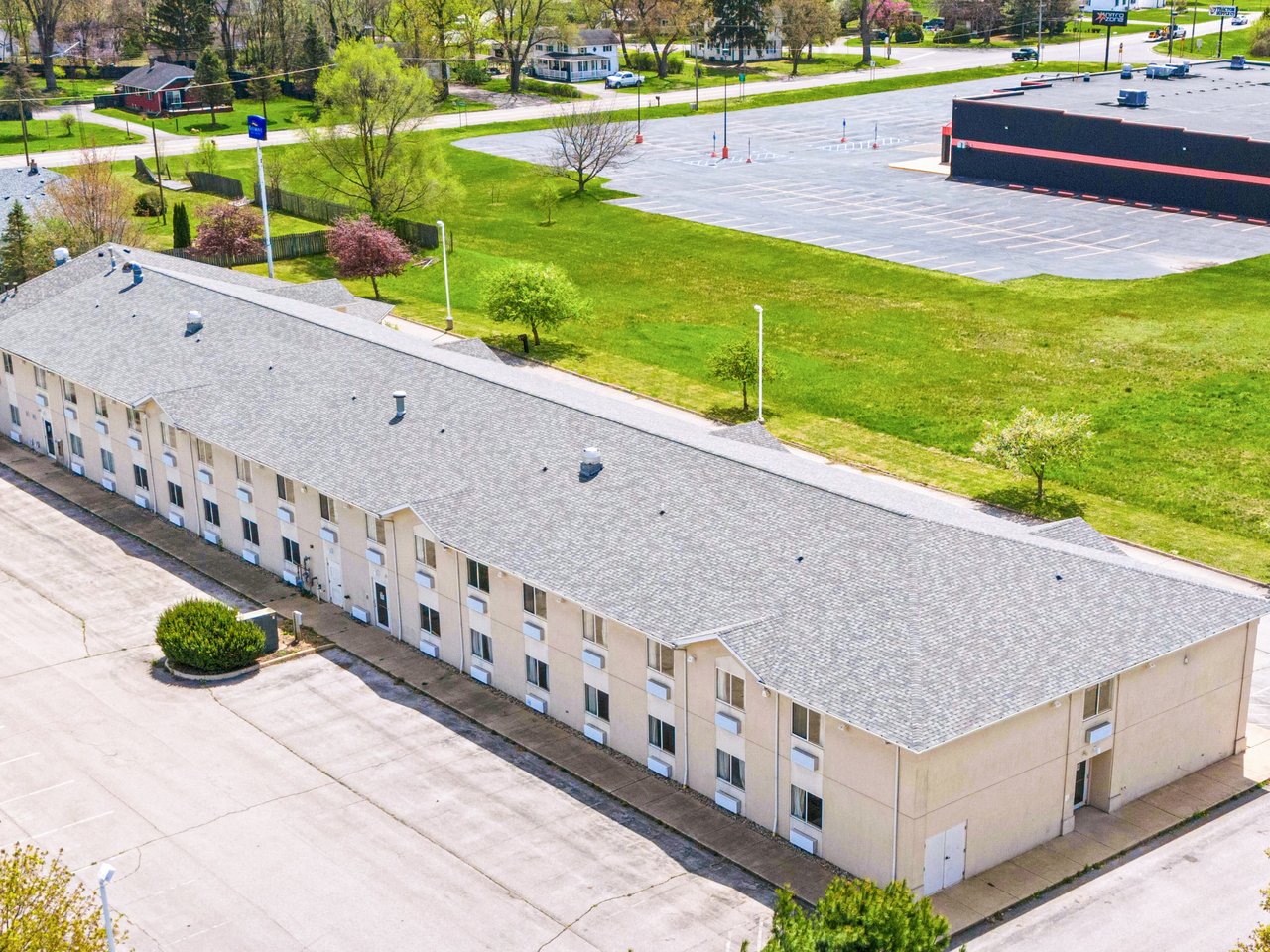
At Ellsbury Commercial Group, we spend a lot of time evaluating assets that don’t fit neatly into a single box—and hotels are one of the most misunderstood examples. Hotels sit in a category most investors underappreciate: they’re real estate… but they also behave like operating businesses. That “hybrid” profile is exactly why 2026 is shaping up to be a year of selective opportunity—especially for buyers who understand revenue management, cost controls, and repositioning.
Industry forecasts going into 2026 aren’t calling for a boom. They’re calling for slow, stable performance—muted growth, modest pricing power, and continued margin pressure.
And that’s precisely what can create the setup: when headlines sound “meh,” pricing can lag reality—while operators still have levers to pull.
The macro setup for 2026: modest demand, pricing doing the heavy lifting
Across major forecasters, the story is consistent:
RevPAR growth is expected to be modest in 2026, roughly ~0.5% in the latest STR/Tourism Economics view (via CoStar/STR coverage).
ADR is expected to rise slightly (about ~0.9%), while occupancy hovers around ~62% in those same forecasts.
Supply is projected to outpace demand, pushing the industry toward slower, steadier growth rather than a sharp rebound.
Meanwhile, broader economic conditions still matter. CBRE’s hotel research has pointed to below-long-run-average GDP growth expectations and inflation staying elevated into 2026—conditions that can pressure margins even if top-line revenue holds up.
Translation: 2026 is likely not “easy-mode” for passive ownership. But for investors who underwrite operations, it can be a great environment to buy well and improve performance.
The two-speed hotel economy is real (and it creates mispricing)
One of the most important data points going into 2026 is how uneven performance has been by chain scale:
PwC (citing STR data through Aug 2025) notes YTD RevPAR up ~0.2%, with ADR up ~1.0% offset by occupancy down ~0.8%—flat overall, but with big segment dispersion.
In that same analysis, luxury RevPAR was up ~5.3% YTD, while economy was down ~1.8%.
That bifurcation matters for investors because it’s where deals are made:
Luxury and experiential assets can hold rate and drive ancillary spend—but are often priced accordingly.
Economy and midscale assets can be mispriced when sellers see softness and buyers lump everything together—even if the property is in a market with resilient demand drivers like healthcare, manufacturing, universities, logistics corridors, or regional leisure.
Why hotels can produce higher returns than multifamily or industrial (when bought right)
Traditional CRE—multifamily and industrial in particular—generally re-prices slowly. Leases roll annually (or longer), rent increases are incremental, and NOI growth tends to be gradual.
Hotels re-price every night.
That operational reality creates three powerful return levers that other asset classes simply don’t offer in the same way:
Revenue management: ADR, channel mix, and length-of-stay optimization can move the needle quickly.
Operational efficiency: Labor scheduling, procurement, utilities, and technology decisions can deliver immediate margin impact.
Repositioning: Targeted capex, branding changes, and guest experience upgrades can unlock higher ADR and occupancy within 6–18 months.
This is why hotel investments can underwrite to materially higher cash-on-cash returns and IRRs than core apartments or stabilized industrial—if execution is strong.
For context, CBRE reported core multifamily going-in cap rates around ~4.73% in Q3 2025, with core unlevered IRR targets around ~7.70%. Hotels typically trade at higher implied yields due to operating complexity and volatility—but that yield gap is often where upside lives.
The capital markets angle: why 2026 can favor hotel buyers
Hotel investment activity has been gradually thawing, but it’s far from frothy.
JLL cited U.S. hotel transaction volume of approximately $9.7B in the first half of 2025—up modestly year over year.
At the same time, many owners are facing:
deferred capex,
refinancing pressure,
brand PIPs, and
thinner margins driven by labor and operating costs.
This combination often creates opportunity: assets that aren’t fundamentally broken, but are under-renovated, under-managed, or owned by sellers who need liquidity.
Why the Midwest is quietly one of the most interesting hotel regions in 2026
The Midwest rarely gets the spotlight, but it offers several structural advantages for hotel investors:
Lower basis opportunities, with price-per-key well below coastal markets
Steadier demand from manufacturing, healthcare, education, and regional government hubs
Strong drive-to leisure in many secondary and tertiary markets
Less severe new-supply pressure than some high-growth Sun Belt metros (market-specific, but often true)
Because hotels are both real estate and operating businesses, smaller Midwest markets can present some of the best mispricings—where institutional capital is less aggressive and strong operators can meaningfully outperform.
Where Ellsbury Commercial Group fits
This is where Ellsbury Commercial Group plays a critical role. Based in the Chicagoland and Northwest Indiana region, Ellsbury has built its platform around market knowledge, speed, and sourcing—particularly across Midwest hotel markets.
In 2026, sourcing matters more than ever. Many of the best hotel opportunities are:
off-market or quietly marketed,
operationally fixable,
tied to renovation or branding stories, or
owned by sellers prioritizing certainty and speed.
Ellsbury continues to identify hotel opportunities across the Midwest where, under the right operational plan, the return profile can materially outperform more crowded asset classes like multifamily and industrial—based on asset-level underwriting and execution, not industry averages.
What to watch when underwriting hotels in 2026
A smart underwriting checklist should include:
Demand segmentation (weekday corporate vs. weekend leisure vs. group vs. extended stay)
Near-term supply pipeline (12–24 months)
Reputation, brand strength, and OTA mix
Expense realism (labor, insurance, taxes, utilities, franchise and management fees)
True capex and PIP scope—and realistic ADR lift assumptions
Bottom line
The 2026 hotel outlook is defined by muted, industry-level growth—but hotels aren’t bought on averages. They’re bought on execution.
For investors working with groups like Ellsbury Commercial Group, who understand both the real estate and operational sides of the business, hotels can offer something many other asset classes can’t right now:
a wide gap between as-is and as-stabilized performance—particularly in Midwest markets where pricing, competition, and basis remain attractive.
Call to Action
If you’re evaluating hotel opportunities in the Midwest and want to understand where operational upside still exists in 2026, Ellsbury Commercial Group is actively sourcing and underwriting hotel deals across the region. Reach out to learn more about current opportunities and how execution-driven strategies can unlock outsized returns.