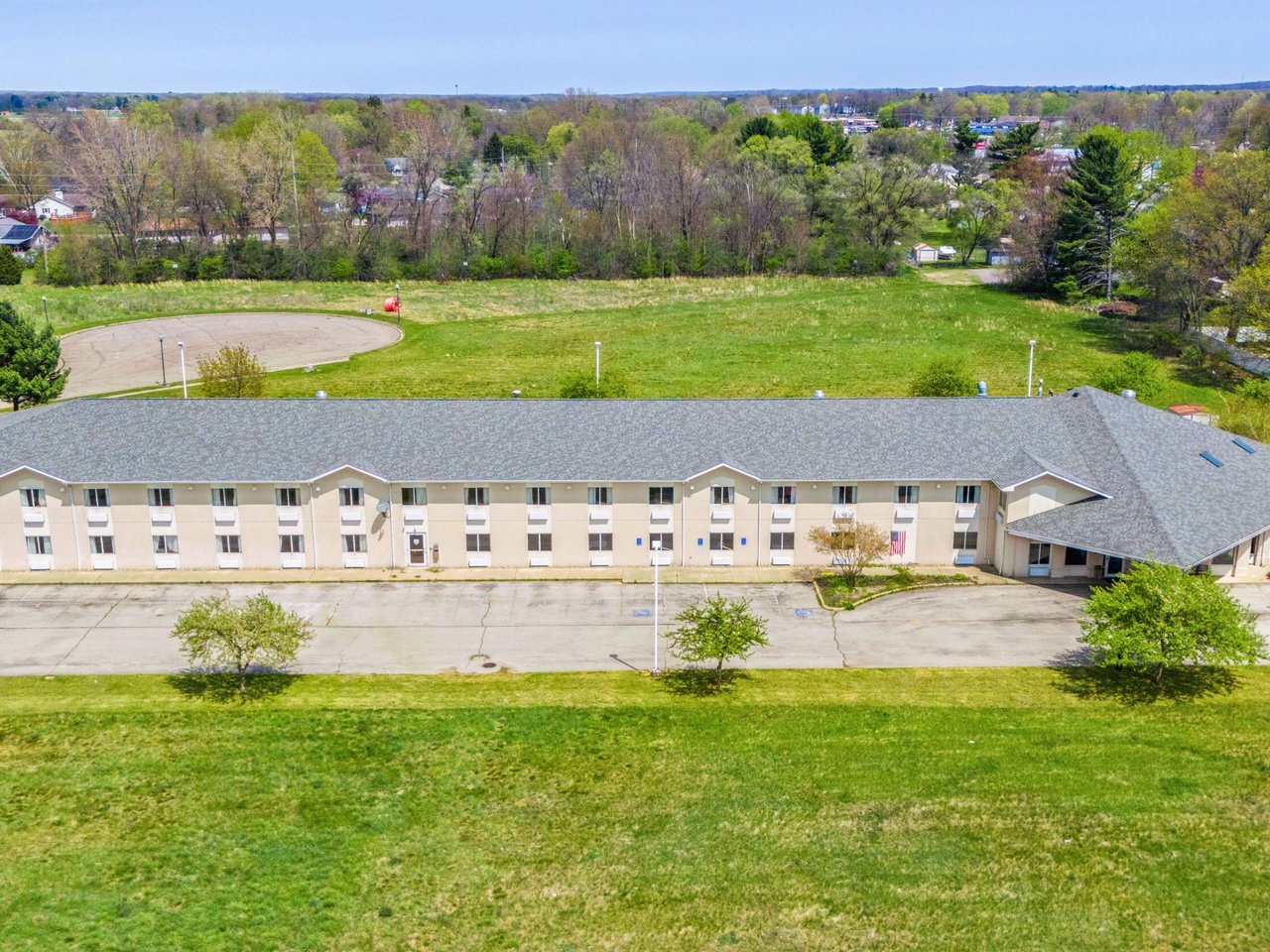
Hotels sit in a fascinating middle ground: they’re real estate (land + building + a long-lived asset) and they’re an operating business (daily pricing, labor, marketing, brand, guest experience). That hybrid nature is exactly why sophisticated investors like them—because when you operate well, you’re not just “collecting rent,” you’re actively manufacturing value.
Below is a practical, investor-focused look at why hotels can be compelling, what metrics matter, how financing typically works, and how hotels differ from multifamily.
1) Hotels have “daily leases,” which creates upside (and demands skill)
Unlike apartments—where leases often reset annually—hotels reset pricing every night. That means:
- In strong demand periods (events, conferences, seasonal spikes), you can reprice immediately.
- Revenue management becomes a real value-creation lever: optimize rate, length of stay, channel mix, and segments (corporate, leisure, group, transient).
This is one reason hotels can sometimes recover revenue faster than longer-lease asset classes after demand shocks—because the “lease roll” is essentially daily.
2) Investors love hotels because operations can drive returns
With hotels, you can create value through actions that directly move revenue and profit:
- Revenue growth: better yield management, improved distribution, reputation management, group sales strategy
- Margin expansion: labor scheduling, cost controls, energy/insurance strategy, procurement
- Capex + repositioning: renovations, rebranding, amenity upgrades, room mix changes
- Brand / management strategy: franchise vs independent, third-party management vs self-op
Hotels are often a business plan investment: buy, fix, re-rate, stabilize, and exit.
3) The metrics hotel investors obsess over
Hotels are underwritten more like operating businesses than “pure rent roll” real estate. Key metrics include:
Top-line demand & pricing
- Occupancy = rooms sold / rooms available (a basic demand gauge). CoStar
- ADR (Average Daily Rate) = average room rate achieved.
- RevPAR (Revenue per Available Room) = ADR × Occupancy (or room revenue / rooms available). Investopedia+1
Many investors track market penetration / index metrics (common in STR reporting):
- RGI (RevPAR Index) compares your RevPAR to a competitive set (100 = parity; >100 = outperform). CoStar
Profitability (where deals are won or lost)
Top-line growth is great, but sophisticated buyers lean hard into profit measures:
- NOI (Net Operating Income) for real estate valuation and debt sizing
- EBITDA / Hotel-level EBITDA (common in operating-business framing)
- GOP (Gross Operating Profit) and GOPPAR (GOP per available room) — a strong lens because it accounts for operating expenses (labor, utilities, etc.)
Valuation & return metrics
- Cap rate (often used carefully for hotels because NOI can be volatile and capex-heavy)
- Cash-on-cash return
- IRR and equity multiple over the hold
- Yield-on-cost / stabilized yield after renovations or repositioning
Risk controls and breakpoints
- Break-even occupancy (the occupancy you need to cover fixed costs + debt service)
- Debt Service Coverage Ratio (DSCR) and lender stress tests (rate, occupancy, ADR decline scenarios)
4) A few hotel real estate statistics (to ground the conversation)
To understand scale: the U.S. market is enormous.
- The AHLA/Oxford Economics economic impact work estimates over 64,000 hotels and ~5.7 million guest rooms in the U.S. (2024). AHLA
- That same report cites almost 1.3 billion room nights sold in 2024. AHLA
- It also estimates hotels supported $894.1B in GDP and $1.681T in business sales (output) in 2024 (economic impact framing). AHLA
On current operating performance, STR reported for October 2025 (U.S.):
- Occupancy: 65.8%
- ADR: $167.71
- RevPAR: $110.35 CoStar
On the development pipeline, AHLA’s 2025 State of the Industry report notes that as of September 2024, the U.S. pipeline had 157,253 rooms under construction, plus 268,190 rooms in final planning and 336,205 rooms in planning. AHLA
On transactions:
- Hotel Dive reports H1 2025 U.S. hotel transaction volume of $9.7B, up 3.9% YoY. Hotel Dive
- A major-sales survey cited Q2 2025 activity with an average sale price per room around $225,000 (sample of 89 transactions over $10M). Hotel Online
5) How hotel investments typically “work” structurally
Hotel ownership often looks like a classic real estate private equity stack:
- Equity (LP investors + GP/sponsor)
- Senior debt (bank, debt fund, CMBS, etc.)
- Sometimes mezzanine debt / preferred equity for higher leverage or heavier value-add
The business plan often falls into one of these buckets:
- Core / Core+: stabilized, branded assets in strong markets
- Value-add: renovations (PIPs), rebranding, operational turnaround
- Opportunistic: heavy repositioning, distressed acquisitions, development
Because hotels are operationally intensive, sponsors are judged heavily on:
- Operator selection and oversight
- Revenue management capability
- Labor strategy and cost discipline
- Capex planning (especially brand-mandated PIPs)
6) How hotel financing works (and why it’s different)
Hotel lending tends to be more conservative than multifamily lending because cash flows can swing faster with the economy.
A useful rule-of-thumb from industry coverage:
- CoStar’s hotel finance primer described typical debt pricing “in the 8% range” (at that time) with ~60%–70% loan-to-value for many situations. CoStar
What lenders focus on:
- Stabilized historical performance (12–36 months of STR-style metrics)
- DSCR under stress (what happens if occupancy/ADR fall?)
- Brand strength and property condition (including PIP obligations)
- Sponsor/operator experience (a huge factor in hotel credit)
Financing becomes meaningfully easier once a hotel is stabilized (consistent cash flow), and harder when it’s transitional (renovation, ramp-up, newly reopened, weak comp-set position).
7) The biggest differences: Hotels vs. Multifamily
Lease structure and revenue volatility
- Multifamily: longer leases smooth income; slower repricing; typically steadier collections.
- Hotels: nightly repricing creates upside but also faster downside in recessions or demand shocks.
Management intensity
- Multifamily: property management matters, but staffing is lighter.
- Hotels: you’re running a full operating platform—front desk, housekeeping, F&B (sometimes), sales, marketing, revenue management, OTAs, and brand standards.
Capex and brand requirements
- Hotels frequently require ongoing refresh cycles and (if branded) PIPs that can be non-negotiable.
Valuation lens
- Multifamily often trades like “income real estate.”
- Hotels trade more like a blend of “income real estate + operating company,” so buyers scrutinize profitability and sustainability of earnings, not just current NOI.
Pricing / yield expectations
Hotels often need to offer higher going-in yields (or a clearer value-add path) to compensate for cyclicality. Recent market commentary has put hotel cap rates (deal-dependent) in ranges such as ~5.0%–6.2% in some gateway/coastal markets and ~6.8%–7.5% in some secondary markets (example cited from a JLL-referenced discussion). Spark GHC
Meanwhile, multifamily cap rates have been discussed around the mid-5% range in recent cycles (market- and quality-dependent). Credaily
Meanwhile, multifamily cap rates have been discussed around the mid-5% range in recent cycles (market- and quality-dependent). Credaily
(These vary massively by market, asset quality, and the point in the cycle—but the pattern investors generally expect is hotels > multifamily in required yield.)
8) Why many investors still choose hotels
Hotels can reward you in ways that “set-and-forget” properties usually can’t:
- Multiple revenue streams (rooms, parking, resort fees, meetings/events, F&B, etc.)
- Fast feedback loops: you can test pricing and marketing and see results immediately
- Repositioning leverage: a renovation + a better brand + better ops can materially change cash flow
- Inflation responsiveness: nightly rates can adjust faster than annual lease bumps (in the right demand environment)
The flip side is real: hotels punish sloppy execution. But for sponsors with strong operations, hotels can be one of the most dynamic real estate businesses you can own.